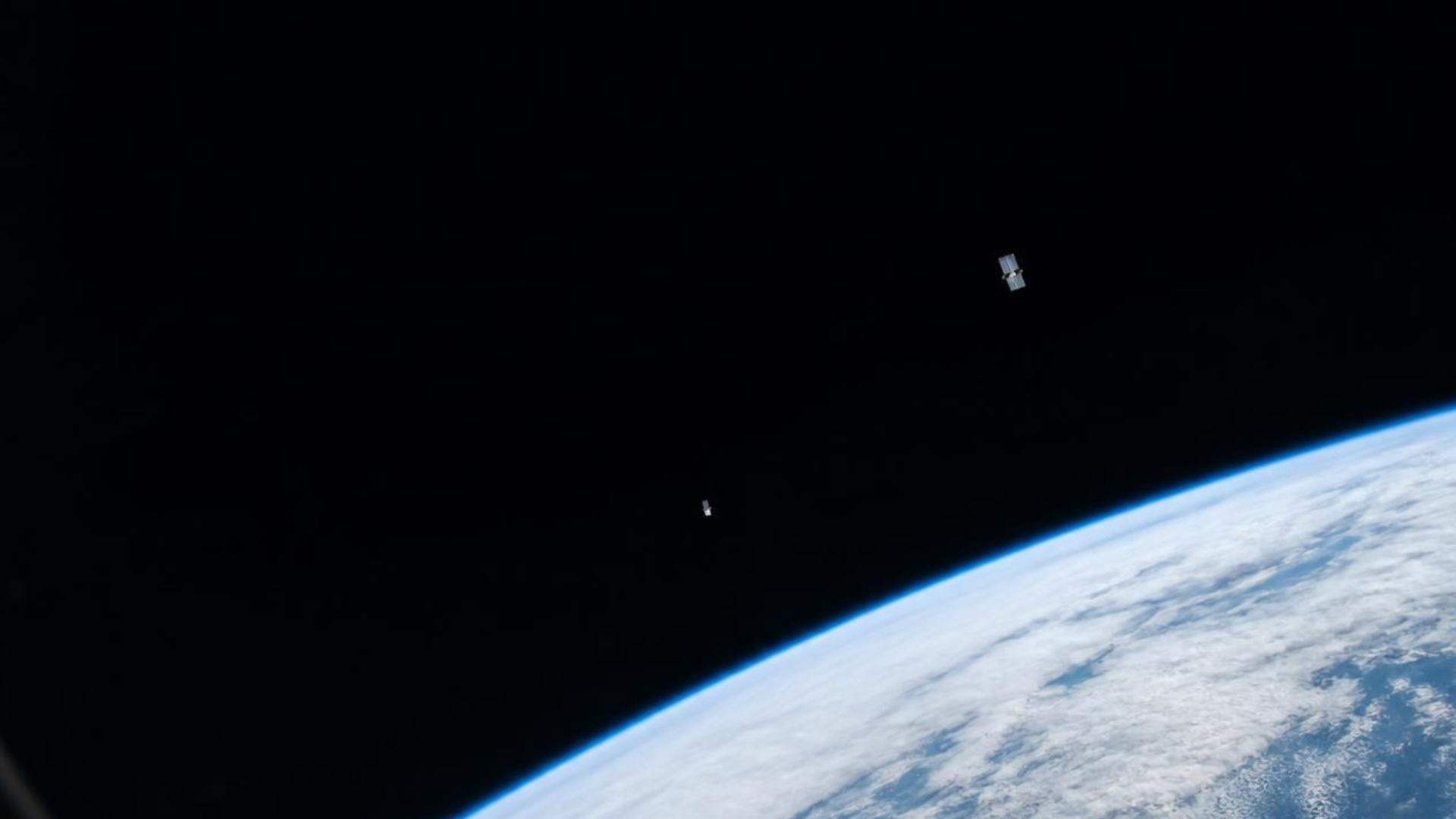
Blue Origin, NASA, and the largest infrastructure project in history: what it means for the private investor.
On May 26, 2026, NASA stepped to the podium at its Washington headquarters and announced what may be the most audacious infrastructure decision our species has ever made: building a semi-permanent base at the Moon’s South Pole. Not an expedition. Not a visit. The first serious, funded, contracted attempt to make human beings live and work on another celestial body on a regular basis. And Jeff Bezos, through Blue Origin, just walked away with the keys to the front door.

For the private investor, this is far more than a landmark moment in human exploration. It is the formal opening of a new asset class — the birth of an economy currently valued at zero on every market balance sheet in the world, yet one that, if timelines hold, will begin generating real cash flows before this decade is out. The question is not whether this matters. The question is whether you are positioned before the rest of the market figures it out.
The Facts: What NASA Announced on May 26
At a press conference inside the Mary W. Jackson NASA headquarters, Administrator Jared Isaacman unveiled the Moon Base program — not a laboratory concept, but a live execution plan with signed contracts, launch windows, and a 79-mission architecture that leads to permanent habitation by 2036 (TechTimes, 2026).
Blue Origin: the central player. Jeff Bezos’s company received an initial $188 million contract — with a performance-based option worth an additional $280.4 million — to deliver the first lunar terrain vehicles to the surface using the Blue Moon Mark 1 Endurance lander (NASA, 2026a). Moon Base I, the program’s opening mission, is targeting no earlier than fall 2026 and will set down at the Shackleton Connecting Ridge, one of the few places on the Moon with near-continuous sunlight (Geekwire, 2026).
The full ecosystem. Blue Origin is not operating alone. Astrolab received $219 million and Lunar Outpost $220 million to develop the crewed terrain rovers. Firefly Aerospace was selected to deploy MoonFall drones — autonomous reconnaissance systems designed to explore permanently shadowed regions where water ice concentrates (NASA, 2026b). In a single afternoon, the program generated more than $1B in direct contracts.
The financial magnitude. NASA has committed $20B over the first seven years — with a projected $30B total over the full eleven-year build-out to permanent habitation (Spaceflight Now, 2026). The program is backed by an initial $10B appropriation from the Working Families Tax Cut Act, FY2026 appropriations, and the President’s 2027 budget request (YourNews, 2026). For context: this is the largest publicly funded infrastructure project the U.S. government has launched since the Interstate Highway System.
The roadmap is concrete and committed: a crewed Artemis IV landing in 2028, a solar power grid by 2029, an operational nuclear reactor by 2030, semi-permanent inhabited modules by 2032, and full permanent habitation capability between 2033 and 2036. NASA described it as humanity’s first outpost on another world — a place that is, in Administrator Isaacman’s own words, “as beautiful as it is hostile” (Washington Post, 2026).
Timeline: from contract to permanent base
| Phase | Timeline | Key milestones |
| Moon Base I | Fall 2026 | Blue Origin launches the Blue Moon Mk1 Endurance lander. Delivers scientific payloads to Shackleton Connecting Ridge. First operational mission of the Moon Base program. |
| Moon Base II | Late 2026 | Astrobotic Griffin delivers 500+ kg of cargo. Astrolab’s FLIP rover is deployed. First autonomous lunar terrain vehicle operations validated. |
| Moon Base III | 2026–2027 | Firefly Elytra deploys MoonFall autonomous drones. Active prospecting of water ice in permanently shadowed regions. Initial communications network established. |
| Artemis IV | 2028 | First crewed lunar landing since Apollo. Astronauts operate pressurized rovers on the surface. First habitation modules installed and tested. |
| Phase 2 | 2029–2032 | Solar power grid deployed. Semi-annual crew rotations begin. Nuclear reactor operational. Semi-permanent research and habitation modules activated. |
| Phase 3 | 2033–2036 | Full permanent habitation capability. Up to 79 cumulative launch missions. A base capable of hosting long-duration scientific research teams. |
Table 1. NASA Moon Base program phases (2026–2036). VenQuest Group analysis based on NASA (2026), TechTimes (2026), Spaceflight Now (2026).
The Financial Dimension: Why This Moves Markets
NASA’s decision is not merely a scientific or political event. It is the activation of the largest public infrastructure spending lever in recent technological history, with a multiplier effect that reaches across dozens of industries. Space is not a niche — it is, increasingly, the frontier of the real economy.
The market that just came into existence
Morgan Stanley estimated in 2024 that the global space economy will reach $1 trillion by 2040. The Moon Base program structurally catalyzes that number: it creates the demand for infrastructure, logistics, energy, telecommunications, and resources that the lunar economy needs to exist. Think of it as building the first highways before automobiles existed — whoever controls the infrastructure controls access to the market (Morgan Stanley, 2024).
The strategic value of lunar ice. The Moon’s South Pole harbors water ice deposits in permanently shadowed craters. This ice is not simply drinking water — it is the raw material for producing liquid hydrogen and liquid oxygen, the propellants that will power missions to Mars and beyond. The cost of launching one kilogram of propellant from Earth to lunar orbit exceeds $10,000. Producing it in situ rewrites the economics of every deep-space mission ever planned (Planetary Science Journal, 2023).
Helium-3 and the long game. The Moon contains deposits of Helium-3 — the theoretical fuel for nuclear fusion — estimated at $3B per metric ton in prospecting analyses. Commercial fusion does not yet exist, but the companies that accumulate lunar access rights today could be sitting on the most valuable energy asset of the century by the time it does (Space Policy Institute, 2022).
The combination of water ice, Helium-3, near-continuous sunlight on the Shackleton Ridge peaks, and its strategic position as the logical staging ground for Mars missions makes the Moon’s South Pole the first extraterrestrial special economic zone in history. Blue Origin just secured the first logistics contract.
The Investment Playbook: Opportunities and Risks
For the private investor, yesterday’s announcement opens a spectrum that runs from the concrete and immediate to the long-range and structural. The discipline is in separating the real cash flows that already exist from the long-duration bets that have not yet found their market price.
How to get exposure: the space investment ecosystem
Blue Origin (private). Bezos’s company remains unlisted — direct access is not available to the public market. But its supplier ecosystem is. Blue Origin’s BE-7 engine runs on cryogenic propellant; the aerospace cryogenics supply chain runs through companies like Chart Industries (GTLS) and Linde (LIN), both publicly traded and both undervalued on a space-economy basis.
Publicly traded companies with direct exposure. Rocket Lab (RKLB), whose Neutron platform has clear lunar ambitions; Redwire (RDW), manufacturer of deployable structures for space habitats; BWX Technologies (BWXT), NASA’s contractor for the lunar nuclear reactor; and Kratos Defense (KTOS), a key provider of deep-space communications systems. All have active contracts or confirmed pipeline exposure to the Moon Base program.
Sector ETFs. For investors who prefer diversified exposure, ARK Space Exploration & Innovation ETF (ARKX) and Procure Space ETF (UFO) offer baskets of space-economy companies. ARKX holds positions in Kratos, Rocket Lab, and satellite telecommunications operators. Liquidity is adequate for smaller institutional positions.
The ground infrastructure play. Every lunar mission requires ground control centers, tracking antennas, and deep-space communication systems on Earth. Viasat (VSAT) and L3Harris Technologies (LHX) are the primary beneficiaries in this segment — both already hold signed NASA contracts for Artemis mission support.
Opportunities vs. Risks: the full picture
| Investment opportunities | Risks to monitor |
| CLPS contracts: predictable NASA revenue streams with cost-plus structures and performance-based option periods | Political risk: administration changes have historically derailed lunar programs — $107B spent across cancelled missions over 20 years |
| Lunar energy infrastructure: solar + nuclear systems — entirely new markets for operators like Westinghouse and BWXT | Technology risk: no operational precedent exists for a human base on another celestial body — every system is first-of-its-kind |
| Water extraction (ISRU): lunar ice can produce liquid H₂/O₂ propellant and potable water — a self-sustaining space circular economy | Funding risk: NASA has not disclosed a total program ceiling; Congress controls annual appropriations and can redirect at any time |
| Lunar telecommunications: the base requires a permanent comms network — commercial satellite operators could become critical infrastructure providers | Concentration risk: Blue Origin and a handful of primes dominate initial contracts — limited upside for later entrants at current valuations |
| Human presence and space tourism: a $1–2B per-mission market by 2030+ per Morgan Stanley Space Economy Report | Time-horizon risk: structural returns are 10–15 years out — unsuitable for short-duration capital or liquidity-constrained portfolios |
| He-3 and advanced materials mining: theoretical fusion fuel — estimated at $3B per metric ton in prospecting analyses | Regulatory risk: international space treaties governing lunar resource ownership remain unresolved — legal framework for property rights undefined |
Table 2. Investment opportunity and risk map — Moon Base Program. VenQuest Group analysis (2026).

VenQuest Research View
There are moments in economic history when you can see it with unusual clarity — the exact point where an industry crosses the line from science fiction to infrastructure. Electrification in 1882. Commercial internet in 1994. The human genome in 2003. May 26, 2026 may be that moment for the space economy.
What NASA did yesterday was not announce an exploration. It signed the first construction contract for the first piece of real estate off the surface of the Earth. That carries market implications the consensus has not yet begun to process. The initial contracts total just over $1B. The full architecture reaches $30B in public money. And the private multiplier — the economy that grows around a permanent base with energy, water, telecommunications, and resources — is a number that does not appear on a single Wall Street valuation model today.
The most real risk here is not technological and it is not geopolitical. It is the risk of arriving late. Every time NASA has opened an infrastructure frontier — GPS, weather satellites, satellite internet — the companies that entered before consensus arrived captured returns that the late-arriving market never could. ARKX trades today without Moon Base in the price. Aerospace cryogenics companies carry no space premium in their multiples. BWXT, the lunar nuclear reactor contractor, trades at valuations that do not reflect a pipeline of lunar missions with signed contracts running to 2036.
At VenQuest Group, our read is unambiguous: the Moon Base program is the ignition event for the commercial space economy. The horizon for structural returns is 10 to 15 years. The horizon for the initial market re-pricing is 2 to 3 years, as Moon Base I, II, and III deliver real operational results that force analysts to put a number on what is currently valued at zero. The Moon is not 238,000 miles away. It is two or three years away from the market deciding it is worth something.
References
1. Bloomberg. (2026, March 24). NASA will spend $20 billion to fast-track moon base construction. https://www.bloomberg.com/news/articles/2026-03-24/nasa-will-spend-20-billion-to-fast-track-moon-base-construction
2. CBS News. (2026, March 24). NASA unveils ambitious $20 billion plan to build moon base near lunar south pole. https://www.cbsnews.com/news/nasa-moon-base-plan-lunar-south-pole/
3. Geekwire / Boyle, A. (2026, May 26). NASA taps Blue Origin to deliver lunar rovers for Moon Base initiative. https://www.geekwire.com/2026/nasa-taps-blue-origin-to-deliver-lunar-rovers-for-moon-base-initiative/
4. Morgan Stanley. (2024). Space: Investing in the final frontier. Morgan Stanley Research. https://www.morganstanley.com/ideas/investing-in-space
5. NASA. (2026a, May 26). NASA provides update on Moon Base rovers, landers, missions. NASA News Release. https://www.nasa.gov/news-release/nasa-provides-update-on-moon-base-rovers-landers-missions/
6. NASA. (2026b, May 26). Moon Base mission architecture and contractor awards — press briefing. NASA HQ, Washington D.C.
7. Planetary Science Journal. (2023). Lunar water ice: Resource potential and in-situ utilization for propellant production. PSJ, 4(3), 112. https://doi.org/10.3847/PSJ/acbe0e
8. Space Policy Institute. (2022). Helium-3 and the lunar economy: Strategic resources for 21st-century energy. George Washington University. https://spacepolicy.gwu.edu
9. Spaceflight Now. (2026, March 25). NASA outlines ambitious $20 billion plan for moon base. https://spaceflightnow.com/2026/03/25/nasa-outlines-ambitious-20-billion-plan-for-moon-base/
10. TechTimes. (2026, May 26). NASA Moon Base: $30B, 79-launch plan locks Shackleton Crater by 2036. https://www.techtimes.com/articles/317212/20260526
11. The Hill. (2026, March 24). NASA will invest $20 billion to build a base on the surface of the moon. https://thehill.com/homenews/space/5798910-nasa-lunar-base-investment/
12. The Spokesman-Review. (2026, May 26). NASA will pay Blue Origin at least $188 million to deliver the first lunar terrain vehicles to the moon. https://www.spokesman.com/stories/2026/may/26/nasa-picks-blue-origin-to-deliver-lunar-rovers-to/
13. Time.news. (2026, May 26). Blue Origin wins $230.4M NASA lunar mission contract. https://time.news/blue-origin-wins-230-4m-nasa-lunar-mission-contract/
14. Washington Post. (2026, May 26). NASA picks Blue Origin to deliver lunar rovers to the moon. https://www.washingtonpost.com/technology/2026/05/26/nasa-picks-blue-origin-to-deliver-lunar-rovers-moon/
15. YourNews. (2026, May 26). NASA unveils $1B moon base push amid cost questions. https://yournews.com/2026/05/26/7004379/nasa-unveils-1b-moon-base-push-amid-cost-questions/