The Space Economy Heading Into H2 2026
The second half of 2026 finds the space economy at a genuine turning point, one that no longer leaves room for naïve takes. Three forces are feeding into each other, and together they shape this period’s investment thesis:
- Private capital is moving at a pace never seen before, capped off by the largest stock listing in history.
- A wave of mergers is knitting together launch, manufacturing, and data under one roof.
- Government spending is rotating away from civil exploration and toward national security.
On top of that sits a quieter but equally telling signal: the sector’s flagship listed fund is bleeding assets even as its price climbs, a sign that smart money is no longer settling for passive exposure.
This article traces all four currents back to verifiable numbers and lays out a concrete investment thesis for H2 2026.
Before we dig into the numbers and the deals, here’s the bottom line up front: these are the five investment takeaways from the half, laid out in plain terms. Each one is backed by data, sourced and spelled out, in the sections that follow.

Investment Thesis for the Second Half of 2026
- Bet on the companies that do a bit of everything. A company that builds its own rocket, manufactures its own satellite, and also owns the data that satellite churns out keeps a fatter margin than one that leans on third parties at every link in the chain. This year’s headline mergers, Rocket Lab with Iridium, MDA with CLS, Intuitive Machines with Lanteris, are all pushing in that direction: whoever controls the whole chain, from launch to the final data point, negotiates from a position of strength and pockets more money. It pays to favor these companies, or the ones shaping up as the next takeover candidates, over single-product players stuck competing on price alone.
- Government money is packing up and moving from exploration to defense. Washington is proposing to cut NASA’s budget while nearly tripling the Space Force’s at the same time. That’s not a bookkeeping footnote: it means contractors leaning on civil missions, like getting back to the Moon, are more exposed to the axe than those supplying military technology, surveillance, or space security. Portfolios should tilt toward the latter.
- Direct satellite-to-phone connectivity could be the next trigger. The U.S. telecom regulator is putting the finishing touches on the rules that will let a satellite talk directly to an everyday phone, no special antenna required. Once those rules are locked in, companies like AST SpaceMobile and the future Rocket Lab-Iridium combo stand to cash in directly. This is a process worth keeping tabs on for the rest of the year.
- Don’t chase the stock everyone’s talking about the moment it debuts. SpaceX pulled off the biggest stock listing in history, and it still took two months to trade back above its offer price. If even the world’s most sought-after deal couldn’t dodge a pullback, the lesson is clear: it pays to wait it out and buy with price discipline, not ride the hype of debut day.
- The price is climbing, but the money is pulling out of the fund that tracks the sector. The leading space ETF is up on the year, yet it shed nearly 40% of its assets under management in just three months. That tells you gains are bunching up in a handful of names while a good chunk of investors cash out of the broad fund. The practical takeaway: this half favors picking your spots, private rounds, M&A, direct stakes — over betting on the whole sector through an index.
Sizing Up the Board: What the Space Economy Is Worth Today
There’s no single official figure for the “size of the space economy”: every organization measures it with a different scope, and mixing them up means comparing apples to rocket ships. The Satellite Industry Association pegs the global space economy at $429 billion for 2025 (+3% year-over-year), of which $303 billion falls strictly under the commercial satellite industry (+4%) [1].
Novaspace, casting a wider net that folds in the economy space “enables,” puts the figure at $626.4 billion for the same year, with global government spending running at $138 billion, and projects the market will crack the trillion-dollar mark by 2034 (5.5% CAGR) [2].
The Space Foundation, in its latest available edition (covering 2024 data), reports $613 billion (+7.8% year-over-year), split 78% commercial and 22% government [3]. The takeaway for investors is simple: the reasonable range for “market size” today runs from $429 billion to $626 billion depending on methodology, and any figure quoted without that caveat should be taken with a grain of salt.
The Private Capital Thermometer
According to Space Capital, the go-to firm for tracking the sector quarter by quarter, private investment in the space economy hit $17 billion in the fourth quarter of 2025 (135 rounds) [4], jumped to $36 billion in the first quarter of 2026 (148 companies) [5] and eased back to $31.6 billion in the second quarter (129 companies) [6] a level that still runs well above historical norms.
Seraphim Space, which applies a stricter pure-venture-capital lens, confirms the same direction of travel: $8 billion across 159 rounds in the first quarter of 2026, with trailing-twelve-month capital at $18.8 billion versus $8.9 billion a year earlier, basically doubling [7].
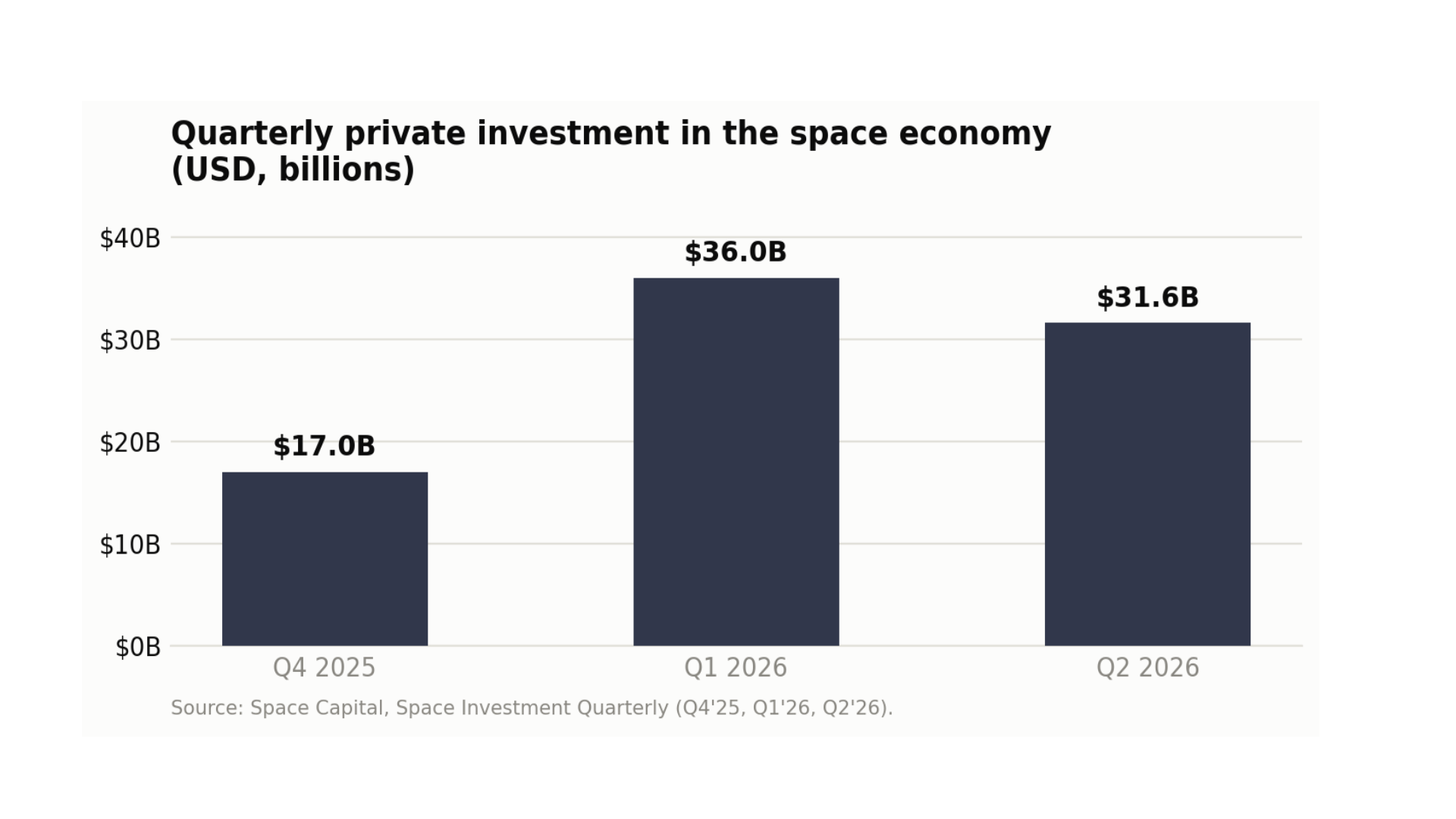
Figure 1. Quarterly private investment in the global space economy, according to Space Capital.
Behind that headline number, the half threw off rounds that are redrawing the competitive map: Sierra Space closed a $550 million Series C led by LuminArx Capital at an $8 billion valuation [8]; ICEYE pulled in more than €1 billion in its Series F, led by General Atlantic, at a valuation topping €10 billion [9]; Anduril Industries raised $5 billion in a Series H that doubled its valuation to $61 billion in barely twelve months [10]; and Axiom Space stacked up $875 million across two closes in the first half ($350 million in February and $525 million, oversubscribed, in June) [11].
But the event that truly defines the half is another one entirely: the SpaceX IPO, the largest stock listing in history. Shares priced at $135 on June 11, raising $75 billion [12]; the stock opened at $150 (+11% above the offer price) and closed the day near $161 (+19%), with market cap topping $2 trillion on its very first day of trading [13]. What matters for the investment thesis is what came next: the stock only clawed its way back above its offer price on August 10, after weeks trading below the listing reference [14] — a post-IPO digestion phase that’s worth paying attention to. On a more modest but no less telling note, Firefly Aerospace priced a secondary offering at $48 a share, raising roughly $192 million for the company [15].
The Vertical Integration Wave: When Buying Beats Building
If 2025 was the year of record-setting rounds, 2026 has, so far, been the year of consolidation. At least six major deals, worth a combined $10.5 billion-plus in dollar-denominated transactions alone, not counting MDA Space’s euro-denominated purchase of CLS, reshuffled the value chain this year, with launch, satellite manufacturing, and earth-observation data all converging onto balance sheets that are increasingly integrated top to bottom.
| Acquirer | Target | Deal Value | Date |
| Rocket Lab | Iridium Communications | $8.0B (EV); $54.00/sh | Jun 29, 2026 [16] |
| MDA Space | Collecte Localisation Satellites (CLS) | €567M (≈70%) | Jul 8, 2026 [17] |
| MDA Space | Blue Canyon Technologies (ex-RTX) | $620M (cash) | Jun 22, 2026 [18] |
| Intuitive Machines | Lanteris Space Systems (ex-Maxar) | $800M ($450M cash + $350M stock) | Jan 13, 2026 (closed) [19] |
| L3Harris | Sale of 60% of Space Propulsion & Power to AE Industrial | $845M (EV) | Jan 5 / Aug 4, 2026 [20] |
| Voyager Technologies | Astrobotic Technology | Up to $300M | Jun 2, 2026 [21] |
Table 1. Major M&A deals in the space economy, 2026.
The anchor deal is Rocket Lab’s acquisition of Iridium: an $8 billion enterprise value at $54.00 a share ($27.00 in cash plus a stock component with a collar between $67.50 and $112.50), with closing penciled in for mid-2027 [16] As of August 13, the regulatory process was moving along — the Hart-Scott-Rodino waiting period had lapsed and the S-4 form was already on file with the SEC [22], though the actual close remains a 2027 story, not a this-half one.
MDA Space was the most active buyer of the period, picking up CLS to fold AI-driven geospatial analytics into its business [17] and snapping up Blue Canyon Technologies from RTX to beef up its satellite-bus manufacturing footprint in the United States [18].
Intuitive Machines wrapped up its $800 million purchase of Lanteris Space Systems (the former Maxar Space Systems) in January, turning itself into what the company calls a multi-domain “space prime” [19] while L3Harris made the opposite move, selling 60% of its space propulsion and power business to AE Industrial Partners for $845 million in enterprise value, to free up capital for the defense priorities it calls core [20].
The Government Anchor Shifts: From Civil Exploration to National Security
Government spending remains the sector’s structural anchor, but that anchor is dragging itself somewhere else. NASA ran on an approved 2026 budget of $24.4 billion, signed into law on January 23 [23], but the Executive Branch’s request for fiscal year 2027, released in April, proposes trimming that to $18.83 billion — a 23% cut [24].
The U.S. Space Force, for its part, is tracking the exact opposite path: from a base appropriation of $26.3 billion for FY2026 [25] (which climbs to $40.1 billion once you fold in the reconciliation funding from the 2025 fiscal policy law), the FY2027 request leaps to $71.1 billion, 170% above the approved base level [26].

Figure 2. U.S. civil (NASA) vs. military (US Space Force) space budgets: FY2026 approved level and the Executive Branch’s FY2027 request. Base figures, excluding reconciliation funds.
One caveat is worth flagging: both FY2027 figures are Executive Branch proposals, not law; Congress will hash them out over the rest of 2026 and likely into early 2027, so the final numbers could end up looking quite different.
Outside the United States, the picture gets more nuanced. ESA committed €22.3 billion at its November 2025 Ministerial Council (+31% in nominal terms versus the 2022 cycle), though that’s a multi-year commitment, not an annual line item directly comparable to the U.S. figures [27]. India, meanwhile, allocated its Department of Space ₹13,705.63 crore (roughly $1.5 billion) for fiscal year 2026-27, a modest 2.16% bump [28].

The takeaway for investors: public capital is gravitating toward security and sovereignty programs even as flagship civil-exploration lines face proposed cuts, a structural tailwind for suppliers plugged into defense, space domain awareness (SDA), and intelligence, surveillance and reconnaissance (ISR), and a warning sign for contractors that lean exclusively on discretionary civil budget lines.
The Regulatory Framework in Motion
Policy is on the move too, and not in just one direction. The new National Space Transportation Policy (NSPM-17), released August 20, sets a target of clearing the way for more than 1,000 annual launches and reentries by 2030, and streamlines commercial access to federal facilities and spectrum coordination [29].
The FAA wrapped up the consolidation of its licensing regime under Part 450 in March [30] and rolled out new user fees for launch and reentry licenses in April, applied retroactively from January 1 [31]. The FCC, meanwhile, opened a rulemaking process in July to enable satellite-to-device communication over unlicensed spectrum [32], a regulatory call directly relevant to AST SpaceMobile and to the future, Rocket-Lab-controlled Iridium.
In Europe, by contrast, uncertainty lingers: the EU Space Act was still unresolved as of mid-2026, with scope, governance, and how third-country operators get treated all still under debate in the Council [33], an open regulatory overhang that investors in European operators should keep close tabs on.
The Pulse of the Public Players
The second quarter of 2026 confirmed that revenue growth across the listed sector is real, if uneven. Rocket Lab booked $234 million (+62% year-over-year) with a $2.36 billion backlog (+137%) [34]; Planet Labs reported $94.2 million (+42%) with a $906.1 million backlog (+72%) [35]; AST SpaceMobile brought in $31.5 million, nearly 26 times the same quarter of 2025 ($1.2 million) [36]; Redwire hit a record $117.1 million (+89.6%) [37]; Intuitive Machines reported $206.2 million alongside a record $1.76 billion backlog [38]; and Iridium posted $225.2 million (+4%), though it suspended guidance and quarterly calls as its absorption into Rocket Lab moves forward [39].
| Company | Q2’26 Revenue | YoY Chg. | Backlog | YoY Chg. |
| Rocket Lab (RKLB) [34] | $234.0M | +62% | $2.36B | +137% |
| Planet Labs (PL) [35] | $94.2M | +42% | $906.1M | +72% |
| AST SpaceMobile (ASTS) [36] | $31.5M | 26x | $1.30B | n/a |
| Redwire (RDW) [37] | $117.1M | +89.6% | $542.1M | record |
| Intuitive Machines (LUNR) [38] | $206.2M | n/a | $1.76B | n/a |
| Iridium (IRDM) [39] | $225.2M | +4% | n/a | n/a |
Table 2. Second-quarter 2026 results (Planet Labs: first quarter of its fiscal year 2027, ending in late April 2026).
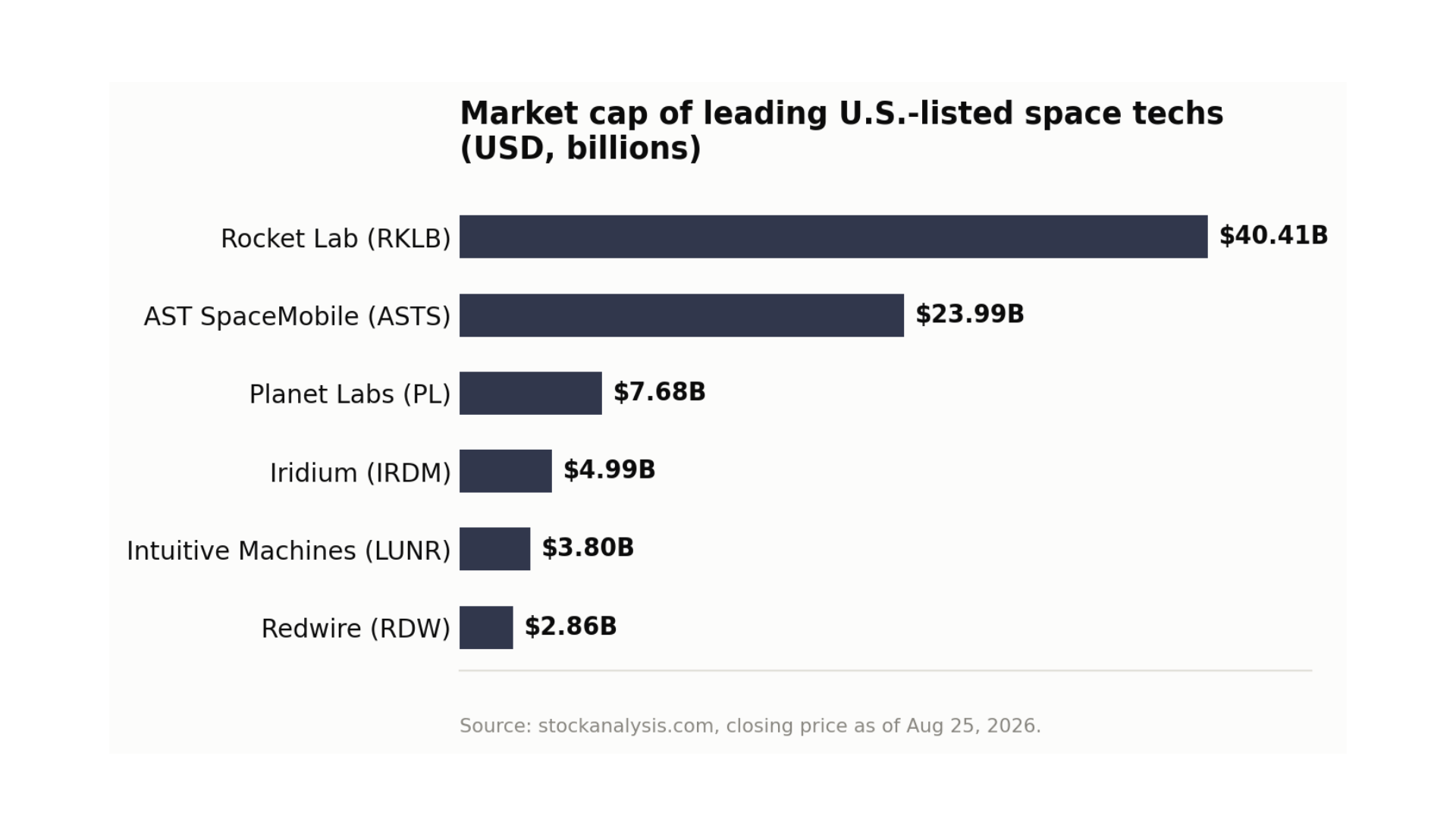
Figure 3. Market capitalization at the close on August 25, 2026.
All quotes reflect the closing prices on August 25, 2026 [40]:
Rocket Lab leads the pack at $40.41 billion (+88.8% year-to-date), followed by AST SpaceMobile at $23.99 billion (+42.2%), Planet Labs at $7.68 billion, Iridium at $4.99 billion (+88.3%), Intuitive Machines at $3.80 billion (+137.2%), and Redwire at $2.86 billion.
One pattern shows up almost everywhere: backlog is outrunning revenue — Rocket Lab, +137% in orders against +62% in billings; Planet Labs, +72% against +42% — which hands the sector good visibility into future demand but shifts the risk onto execution and turning that backlog into booked revenue, particularly while the Rocket Lab-Iridium integration stays stuck in the pending-close column until mid-2027.
The Divergence That Matters: Price vs. Flow
Here’s a data point that rarely makes the headlines, yet it’s key to this half’s thesis. The Procure Space ETF (UFO), the leading listed vehicle tracking the sector, was up between 13.7% and 15.7% year-to-date as of August 25 [41], but its assets under management fell from just over $1 billion on May 27 [42] to somewhere around $570–590 million by that same date — a contraction of nearly 40% in barely three months, despite the index’s positive return [41].
Read alongside the SpaceX post-IPO digestion covered earlier in this piece, this pattern is a textbook case of a market in distribution mode: gains are bunching up in a handful of names (Rocket Lab, AST SpaceMobile, SpaceX itself now that it’s listed), while broad, indexed vehicles are bleeding net capital. For investors, the implication is straightforward: in H2 2026, the sector’s passive beta will likely capture less of the rally than concentrated, thesis-driven positioning — private rounds, M&A, direct stakes.
Risks to Watch
- Regulatory execution risk on the pending M&A: the Rocket Lab-Iridium merger won’t close before mid-2027 and is still working through antitrust and FCC review [22]. Budget risk: the FY2027 figures for NASA and the Space Force are Executive Branch proposals, not enacted law, and the final legislative outcome could look meaningfully different [24,26].
- European regulatory risk: the EU Space Act remains unresolved, which keeps uncertainty hanging over operators on the continent [33].
- Valuation risk: the gap between backlog growth and recognized-revenue growth, layered on top of double- and triple-digit share-price gains so far this year, leaves little room for execution missteps.
- Methodology risk: the market-size estimates cited earlier in this piece aren’t comparable to one another and shouldn’t be used interchangeably in any valuation model.
Taken together, H2 2026 paints the picture of a space economy that has already stopped being a niche speculative bet and turned into a sector whose capital flows, quarterly results, and government spending decisions can increasingly be read with the same toolkit as any other critical-infrastructure industry, with one caveat still standing: much of its growth story is still waiting to be written.
References
[1] Satellite Industry Association. “29th Annual State of the Satellite Industry Report”, May 13, 2026. https://sia.org/news-resources/state-of-the-satellite-industry-report/
[2] Novaspace. “Global Space Economy Reaches $626 Billion, Marking a New Phase of Growth”, January 29-30, 2026. https://nova.space/press-release/global-space-economy-reaches-626-billion-marking-a-new-phase-of-growth/
[3] Space Foundation. “The Space Report 2025 Q2”, July 22, 2025. https://www.spacefoundation.org/2025/07/22/the-space-report-2025-q2/
[4] Space Capital. “Space Investment Quarterly: Q4 2025”, January 14, 2026. https://www.spacecapital.com/reports/space-investment-quarterly-q4-2025
[5] Space Capital. “Space Investment Quarterly: Q1 2026”, April 14, 2026. https://www.spacecapital.com/reports/space-investment-quarterly-q1-2026
[6] Space Capital. “Space Investment Quarterly: Q2 2026”, July 15, 2026. https://www.spacecapital.com/reports/space-investment-quarterly-q2-2026
[7] Seraphim Space. “Seraphim Space Index Q1 2026”, April 2026. https://seraphim.vc/wp-content/uploads/2026/04/Seraphim-Space-Index-Q1-26.pdf
[8] Sierra Space. Press release: Series C round closes at $550 million, March 5, 2026. https://www.sierraspace.com/press-releases/sierra-space-closes-550-million-in-series-c-round-with-a-valuation-of-8-billion/
[9] ICEYE / General Atlantic. Press release: Series F round, June 9, 2026. https://www.iceye.com/newsroom/press-releases/iceye-leads-a-new-era-of-sovereign-intelligence-from-space-with-1b-funding-round
[10] TechCrunch. “Anduril raises $5B, doubles valuation to $61B”, May 13, 2026. https://techcrunch.com/2026/05/13/anduril-raises-5b-doubles-valuation-to-61b/
[11] Axiom Space. Press releases, February 12 and June 4, 2026. https://www.axiomspace.com/release/axiom-space-closes-oversubscribed-financing-at-525m
[12] Forbes. “SpaceX Opens At $150, Surging After Largest IPO Ever”, June 12, 2026. https://www.forbes.com/sites/tylerroush/2026/06/12/spacex-opens-at-150-surging-17-after-largest-ipo-ever-live-updates/
[13] CNBC. “SpaceX stock jumps, market cap surpasses $2 trillion”, June 12, 2026. https://www.cnbc.com/2026/06/12/spacex-stock-jumps-2-trillion.html
[14] CNBC. “SpaceX (SPCX) stock closes above IPO price”, August 10, 2026. https://www.cnbc.com/2026/08/10/spacex-spcx-stock-ipo-price.html
[15] Firefly Aerospace. “Announces Pricing of Public Offering of Common Stock”, May 29, 2026. https://www.globenewswire.com/news-release/2026/05/29/3303371/0/en/firefly-aerospace-announces-pricing-of-public-offering-of-common-stock.html
[16] Rocket Lab / Iridium. “Rocket Lab to Acquire Iridium in Historic Deal”, June 29, 2026. https://investors.rocketlabcorp.com/news-releases/news-release-details/rocket-lab-acquire-iridium-historic-deal-creating-fully
[17] MDA Space. “Enters into Firm Offer to Acquire Collecte Localisation Satellites (CLS)”, July 8, 2026. https://mda-en.investorroom.com/2026-07-08-MDA-Space-Enters-into-Firm-Offer-to-Acquire-Collecte-Localisation-Satellites-CLS
[18] GovConWire. “MDA Space to Acquire Blue Canyon Technologies”, June 22, 2026. https://www.govconwire.com/articles/mda-space-blue-canyon-technologies
[19] Intuitive Machines. “Completes Acquisition of Lanteris Space Systems”, January 13, 2026. https://www.globenewswire.com/news-release/2026/01/13/3217909/0/en/intuitive-machines-completes-acquisition-of-lanteris-space-systems.html
[20] L3Harris. “To Sell Majority Stake in Space Propulsion & Power Business to AE Industrial Partners”, January 5, 2026 (closed: August 4, 2026). https://investors.l3harris.com/news/news-details/2026/L3Harris-to-Sell-Majority-Stake-in-Space-Propulsion–Power-Business-to-AE-Industrial-Partners/default.aspx
[21] SpaceNews. “Voyager completes acquisition of Astrobotic”, June 2026. https://spacenews.com/voyager-completes-acquisition-of-astrobotic/
[22] Rocket Lab. Regulatory progress update on the Iridium acquisition, August 13, 2026. https://www.globenewswire.com/news-release/2026/08/13/3344359/0/en/rocket-lab-corporation-announces-progress-on-iridium-acquisition-hsr-period-lapses-form-s-4-filed-fcc-applications-filed-capital-strategy-underway.html
[23] Congreso de los Estados Unidos. Public Law 119-74, “Consolidated Appropriations Act”, signed January 23, 2026. https://www.congress.gov/119/plaws/publ74/PLAW-119publ74.pdf
[24] NASA. “Fiscal Year 2027 Budget Estimates”, April 2026. https://www.nasa.gov/wp-content/uploads/2026/04/fiscal-year-2027-full-budget-request.pdf
[25] The White House. Signing of Public Law 119-75 (H.R. 7148), February 3, 2026. https://www.whitehouse.gov/briefings-statements/2026/02/congressional-bill-h-r-7148-signed-into-law
[26] Secretary of the Air Force Public Affairs. “Budget Request Directs Record $338.8 Billion to Air Force and Space Force”, April 21, 2026. https://www.af.mil/News/Article-Display/Article/4465493/budget-request-directs-record-3388-billion-to-air-force-and-space-force-to-meet/
[27] ESA. “ESA Member States commit to largest contributions at Ministerial”, November 27 / December 2, 2025. https://www.esa.int/About_Us/Corporate_news/ESA_Member_States_commit_to_largest_contributions_at_Ministerial
[28] Ministry of Finance, Government of India. “Notes on Demands for Grants 2026-2027, No. 95/Department of Space”, February 1, 2026. https://www.indiabudget.gov.in/doc/eb/sbe95.pdf
[29] Office of Space Commerce (EE. UU.). “White House Releases Updated National Space Transportation Policy”, August 20, 2026. https://space.commerce.gov/white-house-releases-updated-national-space-transportation-policy/
[30] FAA. “FAA Streamlines Commercial Space License Approvals”, March 17, 2026. https://www.faa.gov/newsroom/faa-streamlines-commercial-space-license-approvals
[31] Federal Register. “Space Launch and Reentry Licensing and Permitting User Fees”, April 22, 2026. https://www.federalregister.gov/documents/2026/04/22/2026-07789/space-launch-and-reentry-licensing-and-permitting-user-fees
[32] FCC. NPRM “Unleashing Unlicensed Spectrum for Direct-to-Device”, ET Docket No. 26-169, July 16, 2026. https://docs.fcc.gov/public/attachments/DOC-423135A1.pdf
[33] Office of Space Commerce (EE. UU.). “EU Space Act Update – May 2026”, May 8, 2026. https://space.commerce.gov/eu-space-act-update-may-2026/
[34] Rocket Lab. “Announces Second Quarter 2026 Financial Results”, August 10, 2026. https://investors.rocketlabcorp.com/news-releases/news-release-details/rocket-lab-announces-second-quarter-2026-financial-results-posts
[35] Planet Labs PBC. “Reports Financial Results for First Quarter of Fiscal Year 2027”, June 4, 2026. https://www.businesswire.com/news/home/20260604225506/en/Planet-Reports-Financial-Results-for-First-Quarter-of-Fiscal-Year-2027
[36] AST SpaceMobile. “Provides Business Update and Second Quarter 2026 Results”, August 10, 2026. https://www.businesswire.com/news/home/20260810780163/en/AST-SpaceMobile-Provides-Business-Update-and-Second-Quarter-2026-Results
[37] Redwire Corporation. “Reports Second Quarter 2026 Financial Results”, August 5, 2026. https://ir.rdw.com/news-events/press-releases/detail/240/redwire-corporation-reports-second-quarter-2026-financial
[38] Intuitive Machines. “Reports Second Quarter 2026 Financial Results”, August 13, 2026. https://www.globenewswire.com/news-release/2026/08/13/3344411/0/en/intuitive-machines-reports-second-quarter-2026-financial-results-continues-record-backlog-expansion-with-quarter-end-backlog-of-1-8-billion.html
[39] Iridium Communications. Second-quarter 2026 results, July 22, 2026. https://www.stocktitan.net/news/IRDM/iridium-announces-second-quarter-2026-a4ko9cngwkx6.html
[40] stockanalysis.com. Stock quotes for RKLB, PL, ASTS, RDW, LUNR, and IRDM, accessed August 25, 2026. https://stockanalysis.com/stocks/rklb/
[41] ProcureAM. Procure Space ETF (UFO) fund fact sheet, accessed August 25, 2026. https://procureetfs.com/ufo
[42] NewsFile Corp. “Procure Space ETF (UFO) Surpasses $1 Billion in Assets Under Management”, May 27, 2026. https://www.newsfilecorp.com/release/298895/Procure-Space-ETF-UFO-Surpasses-1-Billion-in-Assets-Under-Management
Methodology note: every figure in this piece is drawn from official company announcements, regulatory filings, reports from specialized space-sector market-intelligence firms, and government agencies. Unverifiable crowdsourced sources were deliberately left out, and any figure with uncertain shelf life was flagged as such in the body of the text.